
Beach Plum (Prunus maritima)
by Ginger Laurits
Beach plums were once a common sight along barrier beaches and coastal regions from the mid-Atlantic states to the maritime provinces of Canada. An unfortunate consequence of coastal development is the marked decline of this fruiting tree that is now listed as rare in Maine, with small populations in just four counties: Cumberland, Knox, Sagadahoc, and York. On my morning walks along Moody Beach in Wells, I witnessed the slow decline of beach plums on undeveloped parcels of land until the last patch was recently cleared to make room for a new house.
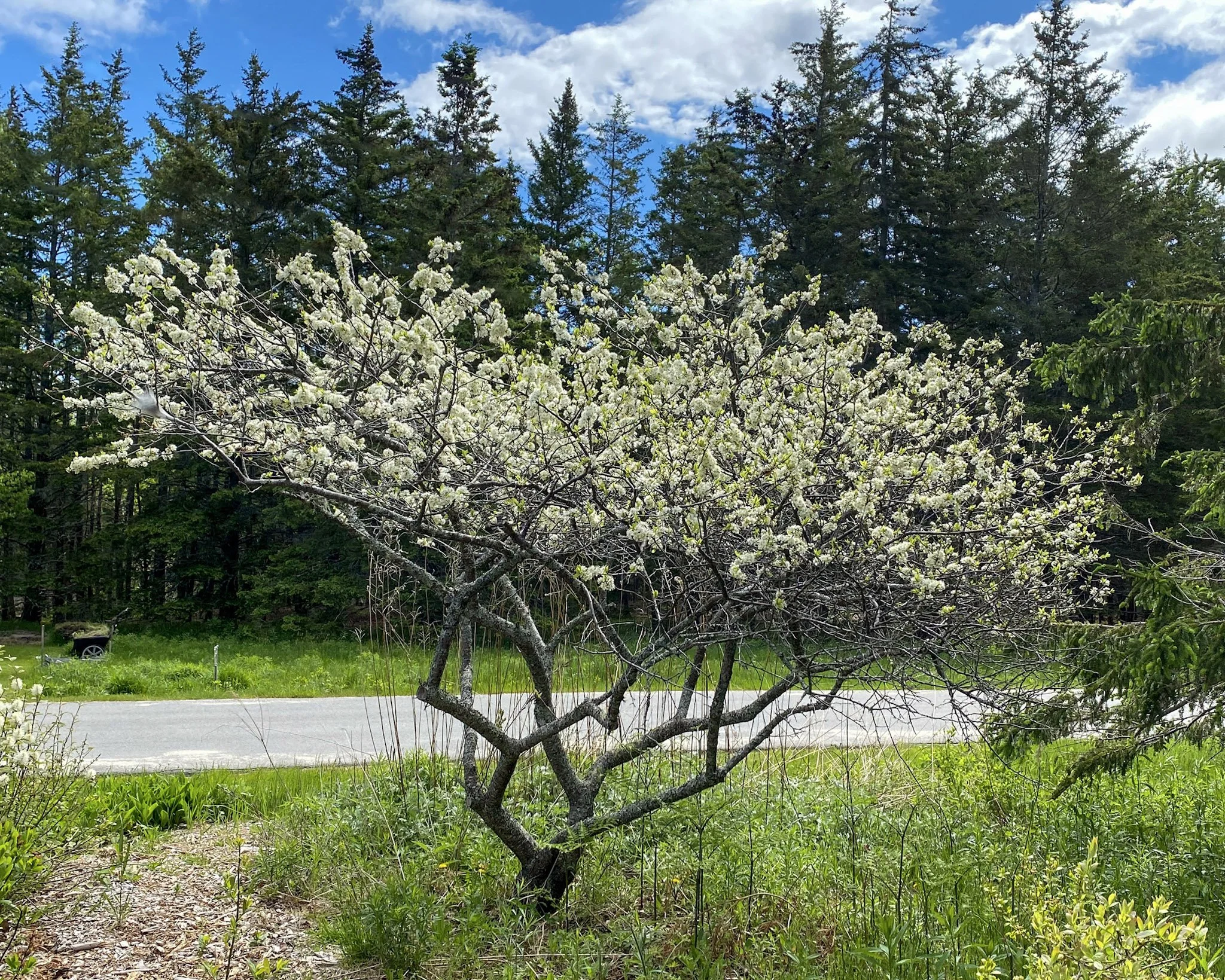
The gnarly branches of beach plum are covered with showy white-petaled flowers in early spring that turn pink once they have been pollinated by native bees and other insects. In late summer to early fall, blue-purple plums cover the plant, but not for long, as they are gathered by birds and small animals who don’t mind the tartness. As with all purple fruits, they are rich in antioxidants, and they make delicious jam.

Beach plums thrive in dry and sandy or gravelly soil — in the wild, they grow in the extremely well drained sandy soils of the coast, often right in the sand dunes. They do best in the landscape when planted in full sun and dry soil, and are happy next to the hot dry south side of a building or on the edge of a parking lot. They make a great garden and low maintenance landscape plant.
In the wild, beach plum grows as a multi-stemmed shrub. Plants can be pruned into more tree-like forms by snipping off new shoots at the base. The suckering habit makes beach plum a great shrub for hedgerows. A minimum of two plants are necessary for cross pollination and fruit production. Heavy fruit production happens every couple of years; in-between years are sparser, although flowering is always abundant.

Beach plums are easily grown from fresh seed collected when the fruit is ripe. Separate the flesh from the pit inside and plant immediately — do not let the seeds dry out. Place the pots outdoors to give the seeds their needed cold period to germinate in the spring. Cover the pot with wire a wire screen to prevent rodents from eating the seeds. Shrubs/trees are available from native plant nurseries – make sure to always ask if it was grown from seed, which ensures genetic diversity.
Beach Plum Farm in Ogunquit, managed by Great Works Regional Land Trust, is a beautiful place to view beach plums in their native habitat. It is well worth the visit, especially in late April to May.
Ginger Laurits is a former Wild Seed Project board member who tends the native plant garden at the Wells Reserve.