
Caring for Your Native Seedlings
by Heather McCargo
You’ve successfully germinated some native seeds and have small pots or flats filled with baby plants. Now what do you do?
We recommend growing first year seedlings in pots all summer and waiting to plant them into the garden or landscape in the fall, when the weather is cooler and the sun is less strong. Once planted, regular weeding and watering is necessary to help young plants get established during the first growing season. If you choose to plant seedlings over the summer, check on them several times a week to make sure they are not drying out or being overtaken by weeds.
Slow growing
Most native species are perennials and grow much more slowly than annual vegetable and garden flowers. These longer-lived wildflowers, grasses, shrubs, vines and trees spend much of the first year or two of their lives developing a root system that, once established, makes them strong and resilient for many years. Because of this slower growth, seedlings of many native species can stay growing together in pots for many weeks or months.
Faster growing meadow and wetland wildflowers (milkweed, aster, black-eyed coneflower, bee-balm, bellflower, goldenrod, lobelia, beardtongue, lupine, ironweed and others) are the first to become crowded in their little pots. If you find your plants are frequently drying out, this is a clue that they could benefit from more growing space. NOTE: some species are spring ephemerals and will go dormant in midsummer (red columbine, shooting star, bloodroot and others). Their leaves will start to turn yellow and disappear, not to return until the next spring. This is normal, keep the pot watered and labeled. Yellow foliage can also be a sign that they have dried out or are too big for their growing space and are not getting the nourishment they need. Repotting to a larger pot should help.
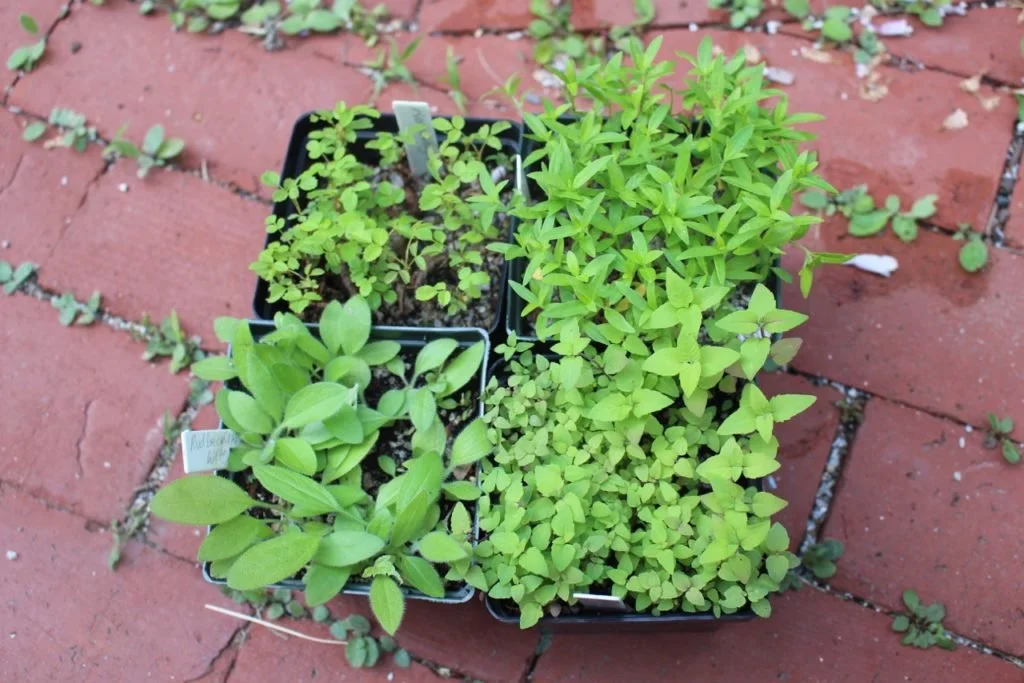
Rose, coneflower, bee-balm, and milkweed ready for larger pots
Moving on up
The easiest way to support the growth of young plants is to transfer the entire pot of seedlings into a larger pot. This gives them room to grow without disturbing their roots. Gently tip out the entire group of seedlings and replant into a bigger pot (8” or 1 gallon pots work well). The seedlings and their potting soil should be at the same level as when they germinated — don’t bury the stems. With the increased soil and space, your seedlings should have plenty of room to grow over the summer. If they get crowded again, just move them up to a larger sized container.
If you decide to divide your seedlings into many individual pots, gently separate them into clumps of 3-9 seedlings and pot into quart-size pots. Dividing seedlings is more disruptive to their growth than just transferring the whole clump, so be sure to water them well and keep them in the shade for a few days before exposing them to direct sunlight.
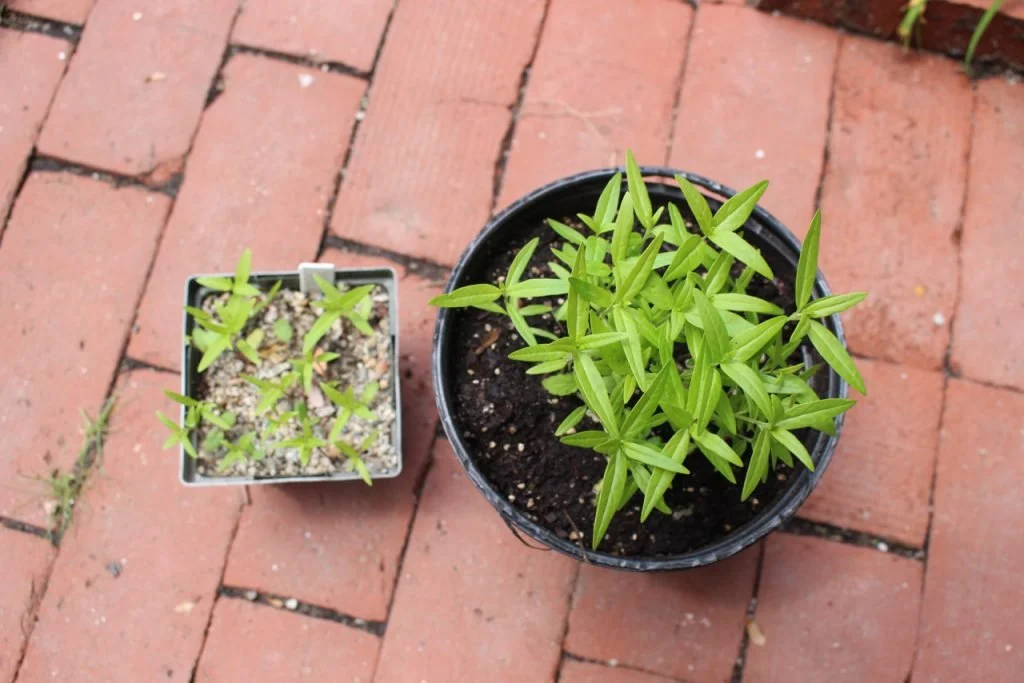
Swamp milkweed in 4” pot, and growing nicely in larger pot
Use an organic compost-based potting soil, which contains a healthy balance of soil microorganisms and all the nutrients your young plants will need to grow. (We like Living Acres) If you are using a sterile, peat-based soil, you’ll need to fertilize with a liquid seaweed or fish fertilizer.
Sun-loving species can be put in a location that gets at least 4 hours of direct sunlight; shade loving species can remain in a shady spot. Check pots regularly and keep watered.
Fall planting
The end of the summer and early fall are great times to move these young plants to their permanent homes. Make sure that you have removed any weeds or competing vegetation, then plant and water well. Be sure to mark the young plants with a durable label so that you can find them again in early spring.