
Vines for Fences & Walls
by Heather McCargo
Climbing plants for fences, trellises and walls
With their roots in the earth and their stems twining upward, vines are a great solution where ground space is limited but vertical space is available. Choose a native species beloved by hummingbirds, butterflies, bumble bees or birds to create food and habitat where once there was none.
Imagine the barren wire of a chain link fence hidden by a wall of leaves and covered with blossoms in the spring and fruits in the fall. Admire the climbing stems of a vine weaving in and out of a trellis, trained up latticework over a doorway or enlivening a plain wall. Relax under an arbor shaded by a canopy of leaves with fruits dangling down, or be enchanted as you pass through an arched gateway covered with vines.
Vines can also add much needed vegetation to a urban environments where there is very little planting space. Instead of hot sun reflecting heat off the bare side of a concrete or metal building, a wall of leaves would absorb solar energy and carbon dioxide, give off oxygen to cool and moisten the air, and provide habitat for birds, pollinating insects and other fauna. Even where there is no soil to plant, a large pot with a vine spilling down its side or weaving up around a porch railing can add a touch of life in an otherwise barren area.
There are half a dozen vines native to Maine that that could green these vertical spaces. Additionally, there are many more species from southern New England to the mid-South that are hardy enough to be grown in Maine gardens.
The Vines of Maine
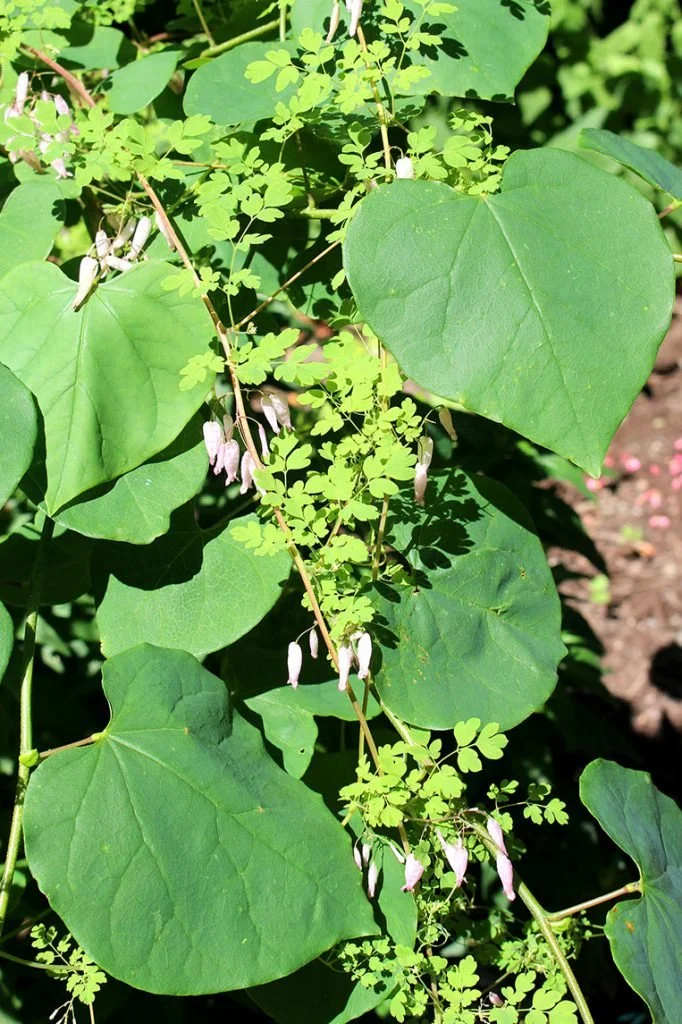
Allegeny-Vine Adlumia fungosa
An herbaceous biennial of moist deciduous forests native throughout much of eastern North America. This is a rare plant in all of its native range, including Maine. Specialty nurseries have propagated this plant from seed for years, and it is a garden-worthy species if you can find nursery propagated plants or seed*. Related to bleeding heart, this delicate herbaceous vine spends its first year as a small ground-dwelling herb in moist shady soil. In the second year, thin bright green stems clamber up an open fence or large shrub and are covered with small pale pink flowers. Sited in partial shade with fertile moist soil, it will re-seed and come back year after year. NOTE: Listed as a rare and protected species in Maine, it is illegal to collect seeds or plants of Adlumia fungosa in the wild.
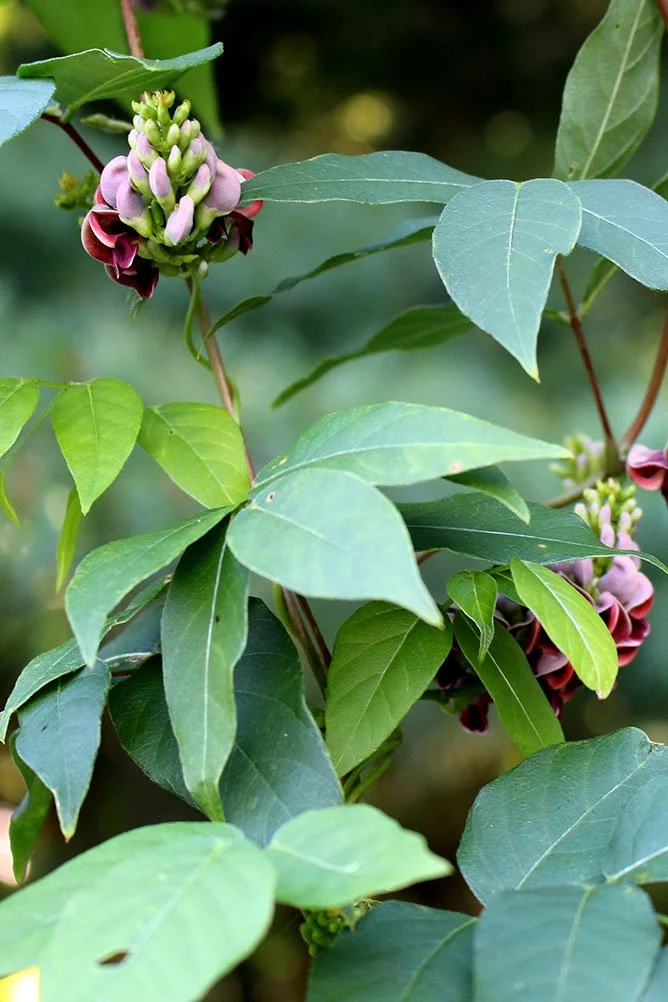
Ground-nut Apios americana
An herbaceous twining vine of moist wooded edges and streamside habitats. Green compound leaves on thin stems twist beautifully on a lattice or wire fence. In mid-summer globe shaped dusky pink to brownish flowers peak out from the leaves and mature into small peapods in the fall. Ground-nut is in the legume family and its root is a delicious edible tuber that has been used as food for centuries, and remains a favorite of foragers today. Grows in sun to shade in moderately moist soil.
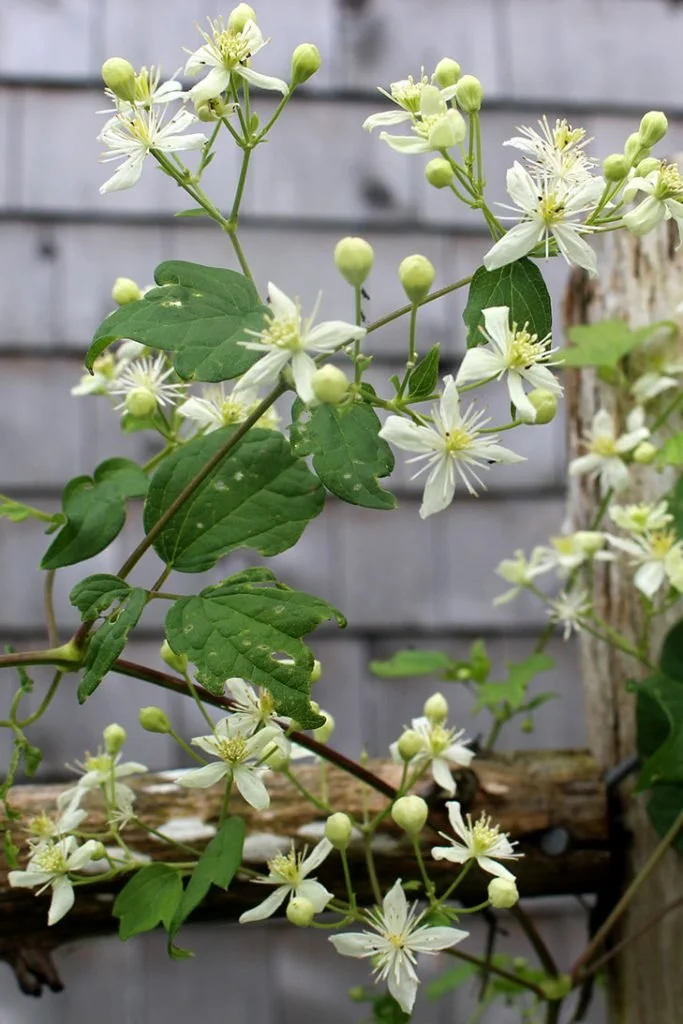
Wild clematis Clematis virginiana
An herbaceous vine of roadside ditches and wet meadows. Long thin stems climb up open shrubs and bloom in August with small white cross-shaped flowers attractive to pollinators. Later in the year the long silky seed heads glimmer and remain visible for many months. The roots want shade and moist fertile soil, while the blossoms are most abundant up in the sun.
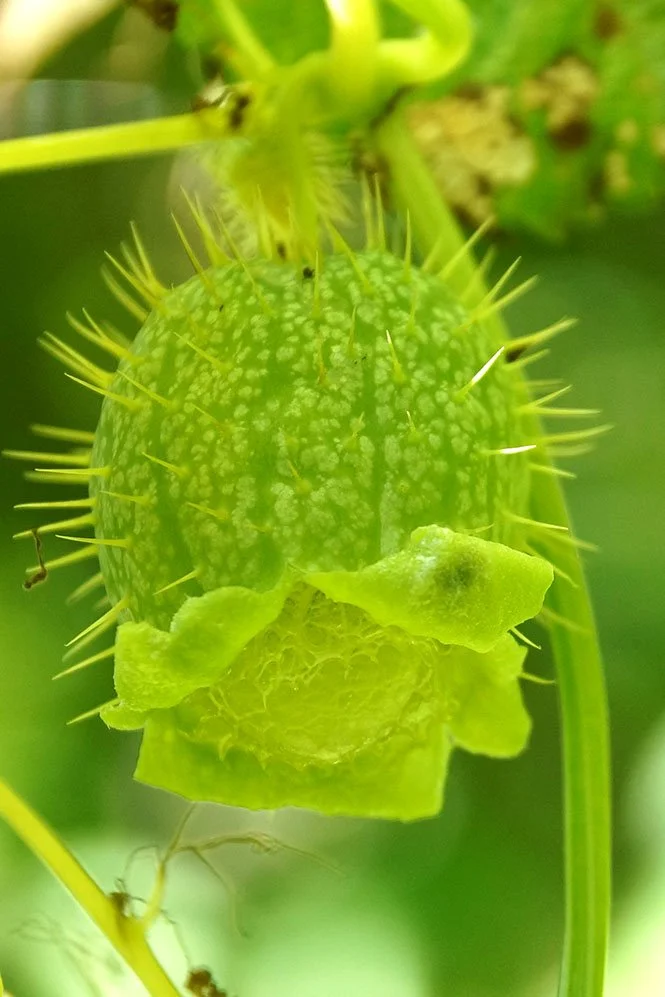
Wild cucumber Echinocystis lobata
A fast-growing and dramatic annual vine of woodland edges and roadsides, this relative of squash and cucumber has large star-shaped bright green leaves and numerous clusters of creamy white flowers that attract many pollinating insects from midsummer to fall. The spiky cucumber-like fruits are enchanting. Ideal for fences, trellises, or roaming over large open shrubs in sun to part shade. Fun and engaging in schoolyards.
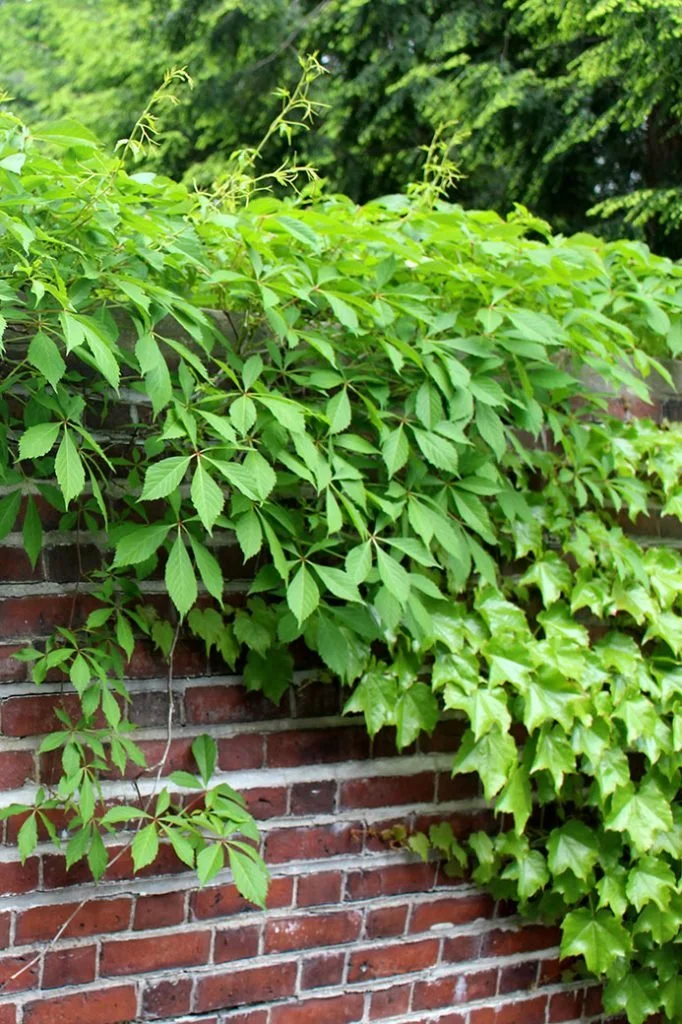
Virginia Creeper Parthenocissus inserta & P. quinquefolia
These are two very similar species from woodland edge habitats. The former has twining stems that scramble across the ground or up trees and grasp with delicate tendrils, the latter adhere to walls with little suction cups, perfect for mail boxes and phone poles, or masonry walls. The Virginia Creeper Sphinx Moth needs the foliage of this important wildlife plant in its caterpillar stage, and birds prize the fall fruits as the leaves turn burgundy in fall. Great for large spaces, but also can be grown in a large pot.
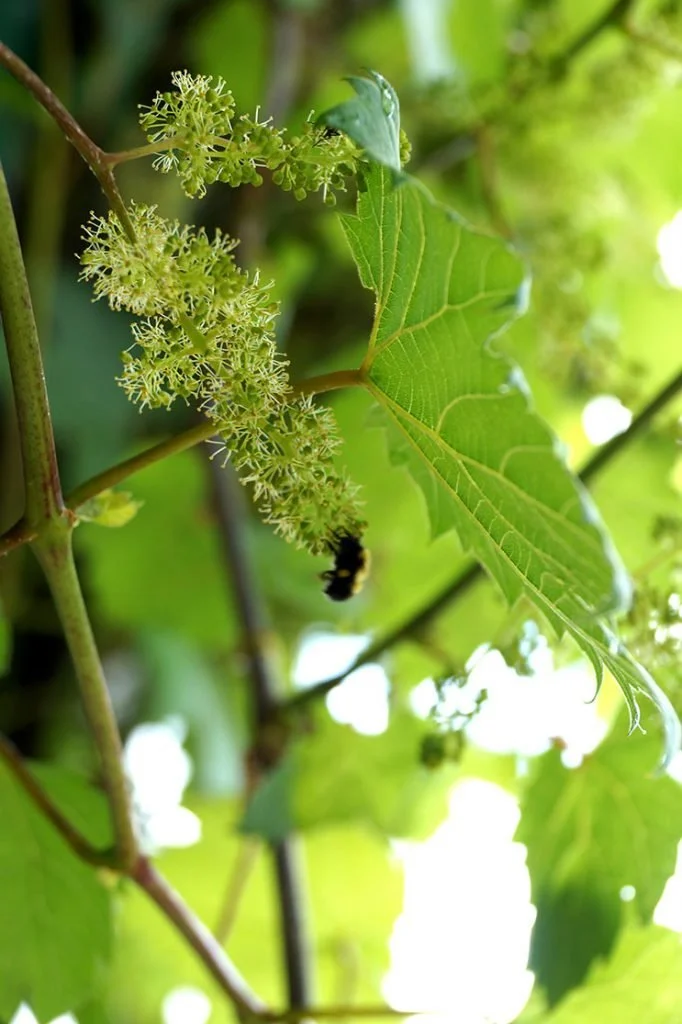
Wild Grape Vitis labrusca, V. riparia
With large lobed leaves and woody stems, our native grapevines climb up and over large shrubs and trees in river and lakeside environments. American grapes are rampant growers with stems reaching 40’ in length. Needs a large fence or arbor to accommodate their spread. If you have a big space to cover, you will have a beautiful and edible vine that supports pollinators, birds and people, and casts excellent shade.
Hardy Vines From South of Maine
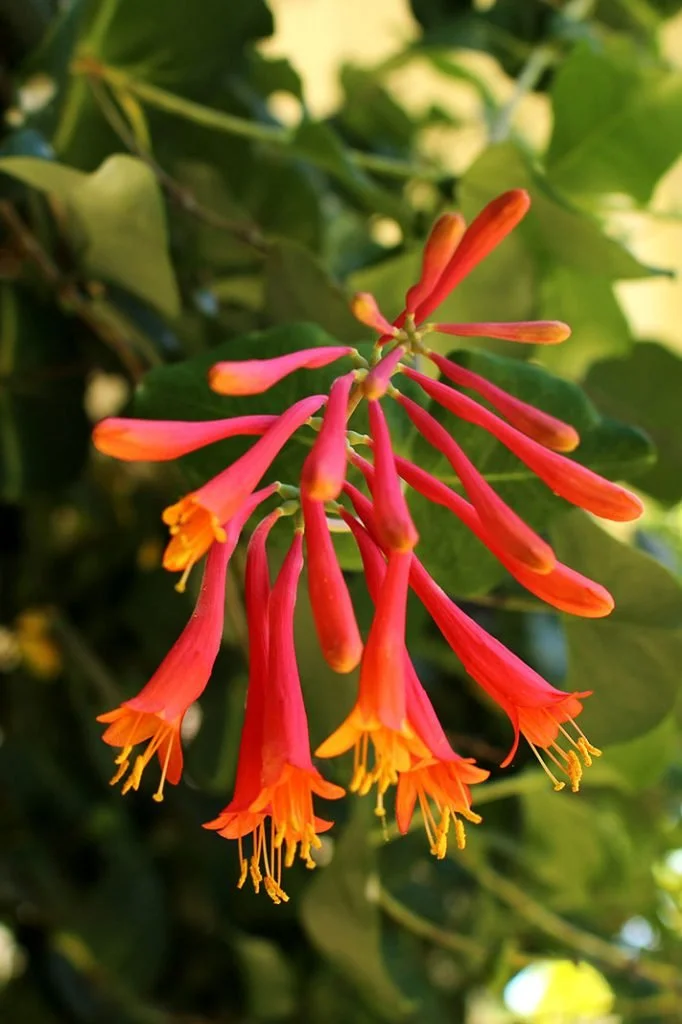
Trumpet honeysuckle Lonicera sempervirens
This vine leafs out very early in the spring and begins a long season of bloom in late May. The coral tubular, whorled flower clusters attract hummingbirds and other insect pollinators. In the fall, birds relish orange-red fruits. A twining vine, it can be trained up wire or lattice around a porch or doorway, or left to scramble over a fence or down a bank. It also makes a great potted plant. Tolerant of sun to shade (the more sun, the more blossoms) in moderately moist and fertile soil.

Wild Yam Dioscorea villosa
A perennial vine with pleated leaves on twining stems about 10’ long. Foliage in spring has a coppery sheen that turns a deep green by summer. Small green flowers ripen to unusual, tan seedpods. Great for twining up a lamppost, downspout, lattice fence or large open shrub. Plant in part to full shade and moderately moist, fertile soil. Roots are used medicinally.
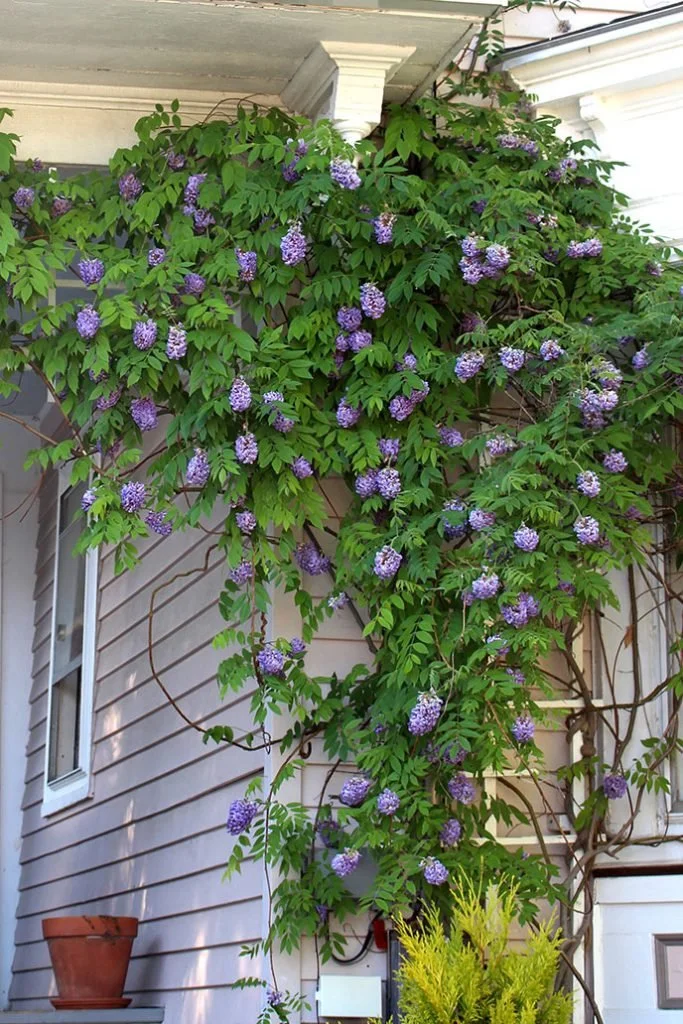
American wisteria, Wisteria frutescens
Native to the Southeastern US. After the leaves appear in spring, lavender pea-like flower clusters dangle like grapes along the stems. Growing in woodland edges and thickets, its woody stems climb by twining and need a strong supportive arbor or metal trellis to accommodate the stems that can reach 25’.
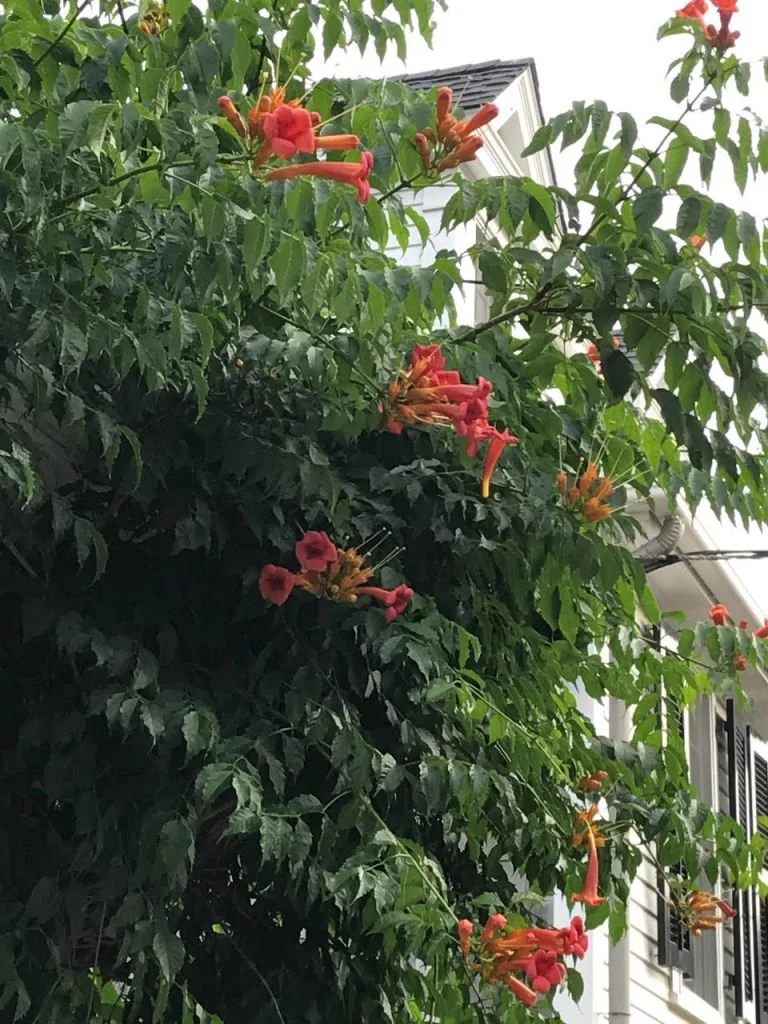
Trumpet creeper, Campsis radicans
A very large climbing vine found in thickets and disturbed areas in the Southeastern US. Dramatic trumpet-shaped flowers are a hummingbird favorite. A mature plant will be covered with thousands of flowers, and these will attract an abundance of hummingbirds during bloom. Other birds will make nests amongst its branches. Attaches itself by aerial roots and needs a large fence, arbor, masonry wall or building to climb to its full potential. Not a plant for small spaces since it is an aggressive spreader, but well suited to tough landscapes, such as an industrial park or shopping mall, where something large and low maintenance could create a dynamic, green space and provide a lot of wildlife habitat. Thrives in sun to part shade, with dryer soils limiting its growth.

Dutchman’s pipe, Isotrema macrophyllum
A large vine of rich woods and stream banks. The large, heart-shaped leaves create a dense and tropical looking screen. Tubular flowers are hidden among the leaves and are interesting but inconspicuous. The sole food for the blue pipe-vine swallowtail butterfly. Needs a trellis or wires to support its twining woody stems.