The Butternuts of Belfast
by Philip Crystal
Belfast, Maine is loaded with butternut—the tree, not the squash. Since moving back to Maine last fall, I have seen more mature butternuts here than during my years at Purdue conducting graduate studies on the species. A young butternut, barely a shrub, is behind the iconic Front Street Shipyard. At the intersections of Durham Street and Northport Ave., Miller and Congress Streets, and Salmond and Charles Streets are sapling-sized trees. Occasionally, half a butternut shell along the sidewalk will lead to a mature tree peeking above the rooftops a couple streets over.
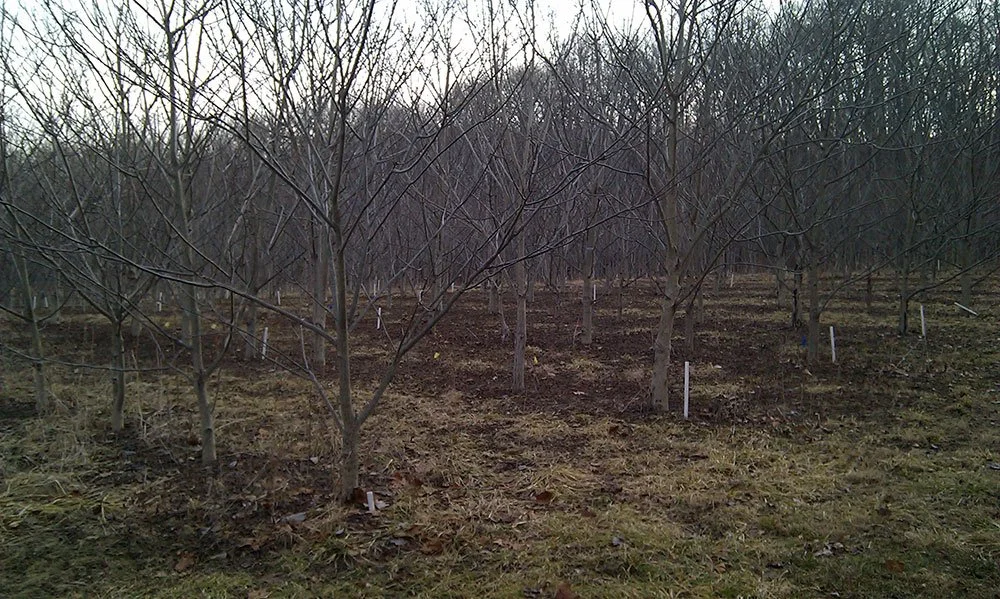
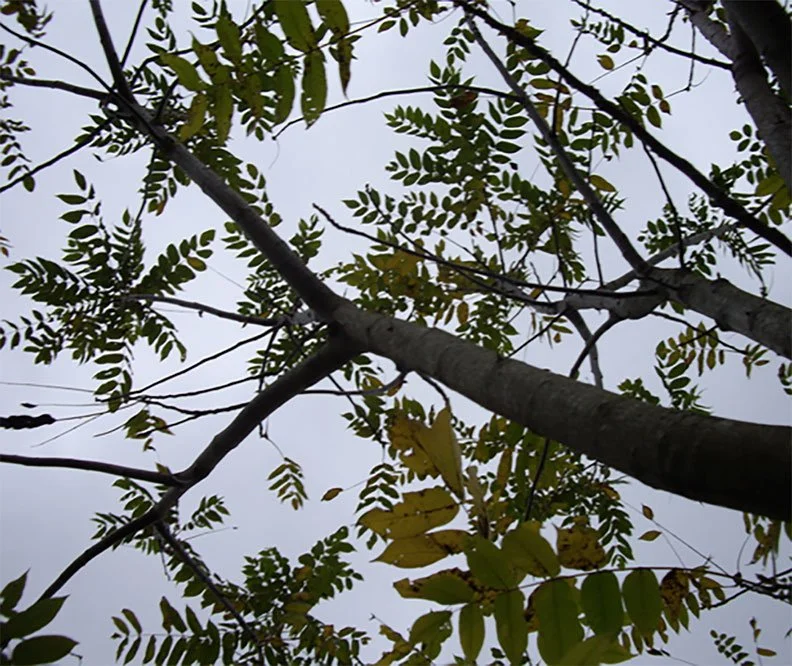
Butternut is distinctive up close. As the tree matures, the thin silvery-grey bark separates into flat-topped ridges separated by black crevasses. The stout twigs are smooth, an odd tan-olive green with a moustache of barely tan hairs above the leaf scar, where last year’s leaf connected to the rest of the tree. They are easily identified in winter by the stout ends of their branches, forking like tridents, but even as winter transitions into spring and bare trees fill out with leaves, butternut is easy to spot. The reason for the stout twigs is large compound leaves, usually 18 inches long. However, do not go looking for a tree with umbrella-sized leaves—each of these botanical leaves consists of a rachis and leaflets, what looks like a twig and leaves, at least until fall arrives, at which point the leaflets turn yellow and drop one by one until finally the rachis itself falls.

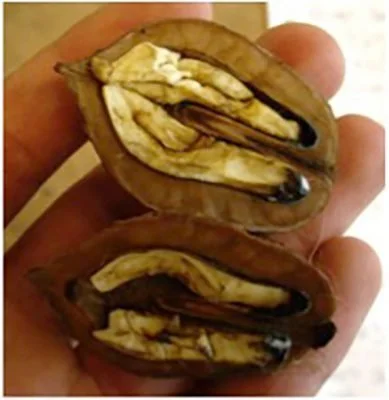
It is the delicious nut, the source of the name butternut, that is the most fascinating feature. Like all walnuts, even the English, the nut is enclosed in a leathery green husk. Butternut’s husk looks like a hairy green lemon (the source of another name: lemonnut).
It was butternut that inspired me to become a dendrologist and tree physiologist, that enthralled me with the natural history of our native trees. Unfortunately, this translates into understanding that Belfast’s large population of butternut is remarkable because the species as a whole is doing poorly.

Butternut was once more prevalent in the Northeast United States. The late Dr. Charles Michler theorized that the butternut population was especially large because the abandonment of Northeast farmland for the Midwest left sunny, albeit rocky, fields open for the species to establish. However, from 1968 to 1986, the US Forest Service documented a 77% decline in the species. Butternut canker disease, believed to be an introduced pathogen, is partially to blame, as are habitat loss, hybridization with other introduced species, and the species’ short life span of 70 years.
Efforts to restore butternut raise many questions. Should we move butternut to places where we desire delicious nuts, shade, and diversity? Or to locations where we desire increased amounts of high-energy food for large mammals? Several hundred years ago the answer to both questions would have been a resounding yes. But that was the golden age of plant transport, before we understood the impact that nonindigenous species can have on local flora and fauna.
Today we understand that there can be drastic consequences to transporting species. Should we accept hybridization in exchange for increased resistance to disease, or should we seek out the straight species? For either option, where do we source our seeds? Butternut can be found from Tennessee to New Brunswick, from Maine to Minnesota. Should we plan for a warmer, wetter future and use seed from farther south? Or play it safe with locally adapted seed?
None of these are easy questions. I know that I’ll keep an eye out for butternut and plant the native, when I can.
Phil Crystal grew up in Mapleton, Maine. For three years butternut was the prime focus of his life. He is always excited to talk trees and can be reached at phil.crystal@gmail.com.