How to Overwinter Seedlings
by Caitlin Marshall
Watching your first batch of winter-sown seeds emerge as tiny seedlings in the spring is a true joy of gardening with native plants. Those little seeds, left all winter in the cold and the wet - they really do turn into plants! And that first spring, summer and fall, they keep growing, though not always how we might expect. Unlike annuals in the vegetable garden, many native perennials spend their first growing season concentrating on growth below ground, and some might still be quite small come winter. What then?
How do you know if your plants are ready to go into the ground, or if they should be overwintered in their pots? While there are no hard and fast rules here, native plants are generally ready to transplant into the landscape when they have well-developed root systems, and have shown some above ground growth. Depending on the species, that might be just an inch or so tall (lobelia, for example), or up to a foot or more (some black-eyed coneflowers). To inspect the roots, you can gently tip the pot over and slide out the clump of plants and soil – if you see plenty of long, white roots, it’s likely good to go in the ground. Even with healthy root growth, you may still want to consider overwintering very small plants. You can grow them on for another season in their pots, until they’re big enough to keep track of in the garden.
Once you’ve determined the plants you’ll be keeping in pots for the winter, find a spot where you can protect them from extreme cold and predation. These two aims are a bit at odds with each other: what keeps the plants protected from harsh weather is also very good for keeping rodents protected, too, and they may nest in the snug bed you’ve made.
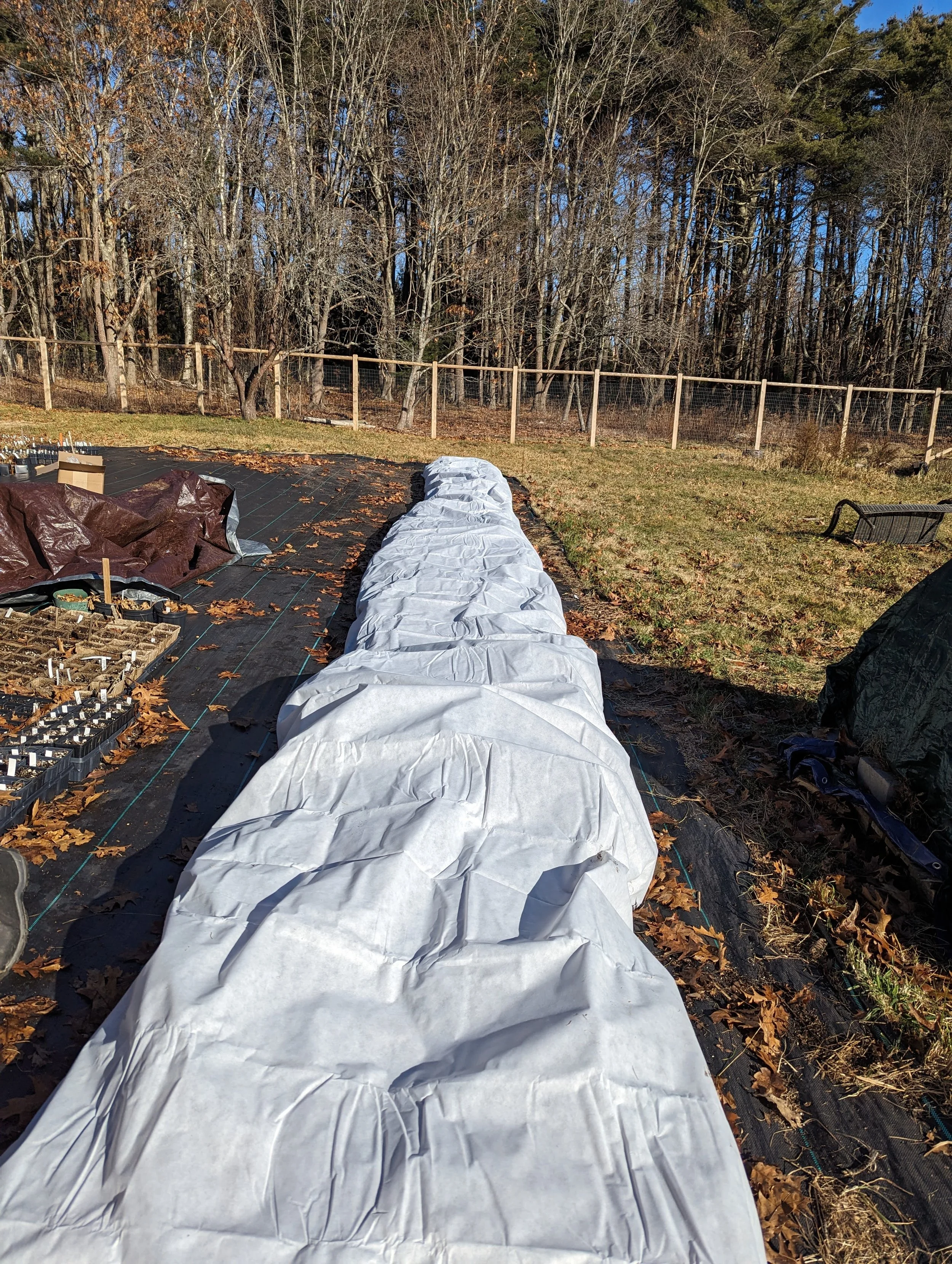
Frost protection: the aim here is to protect the plants against wide fluctuations of temperature, and against extreme cold. Northeast native plants are adapted to survive freezing winter conditions, but the temperature of soil in a pot will swing more widely than soil in the ground, and this can be stressful for roots. To simulate being planted in the ground, you can “heel in” the pots into a pile of wood chips or leaf mulch – that is, snug each pot down into the mulch until the soil surface is level with the surface of the mulch pile. For more protection, add a layer of leaves on top, and cover with a row cover rated for frost protection. Use bricks or stones around the edge to keep row cover in place.
Predation protection: here, the goal is to make the plant nursery unattractive to overwintering rodents. Wait until plants are frozen before covering with fabric. Hopefully, rodents will establish their winter homes elsewhere during the first freezing nights. Keep in mind that some predation is to be expected, and may not spell the end of a plant! Many plants will bounce right back in the spring, drawing on their underground reserves. You can also deter rodents with peppermint oil, or set snap traps if you are concerned about lots of mice. Of course, we strongly advise against any use of poisons!
What you most need to prepare for depends on your climate. At the northern edge of the Northeast, you can let the pots freeze, tuck them in well, and leave until spring. In more southerly areas (and increasingly, here in southern Maine), where winter temps do not consistently stay below freezing, you may want to cluster the plants together and cover with leaves, but only toss on a fabric layer if a very cold night is on the forecast. Or, forgo row cover altogether.
Come spring, uncover the pots, remove the covering of leaves and take them out of the mulch. As the weather warms, begin watering again regularly and fertilizing sparingly (with a dilute seaweed fertilizer). Divide if they become crowded, and enjoy watching them grow. By fall, they should be ready to move into the garden. Your patience will be rewarded with robust, beautiful plants ready to start the cycle again.
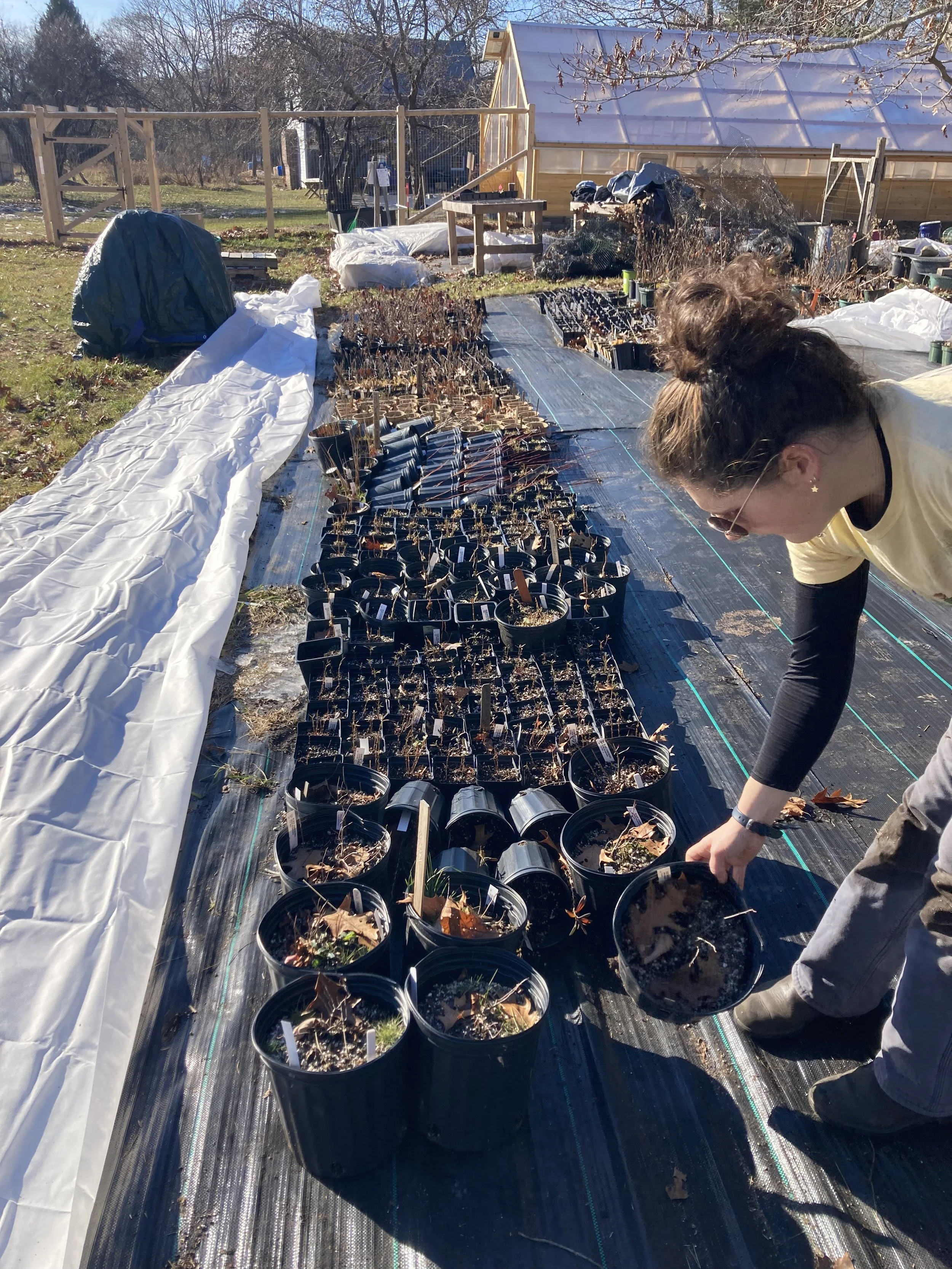
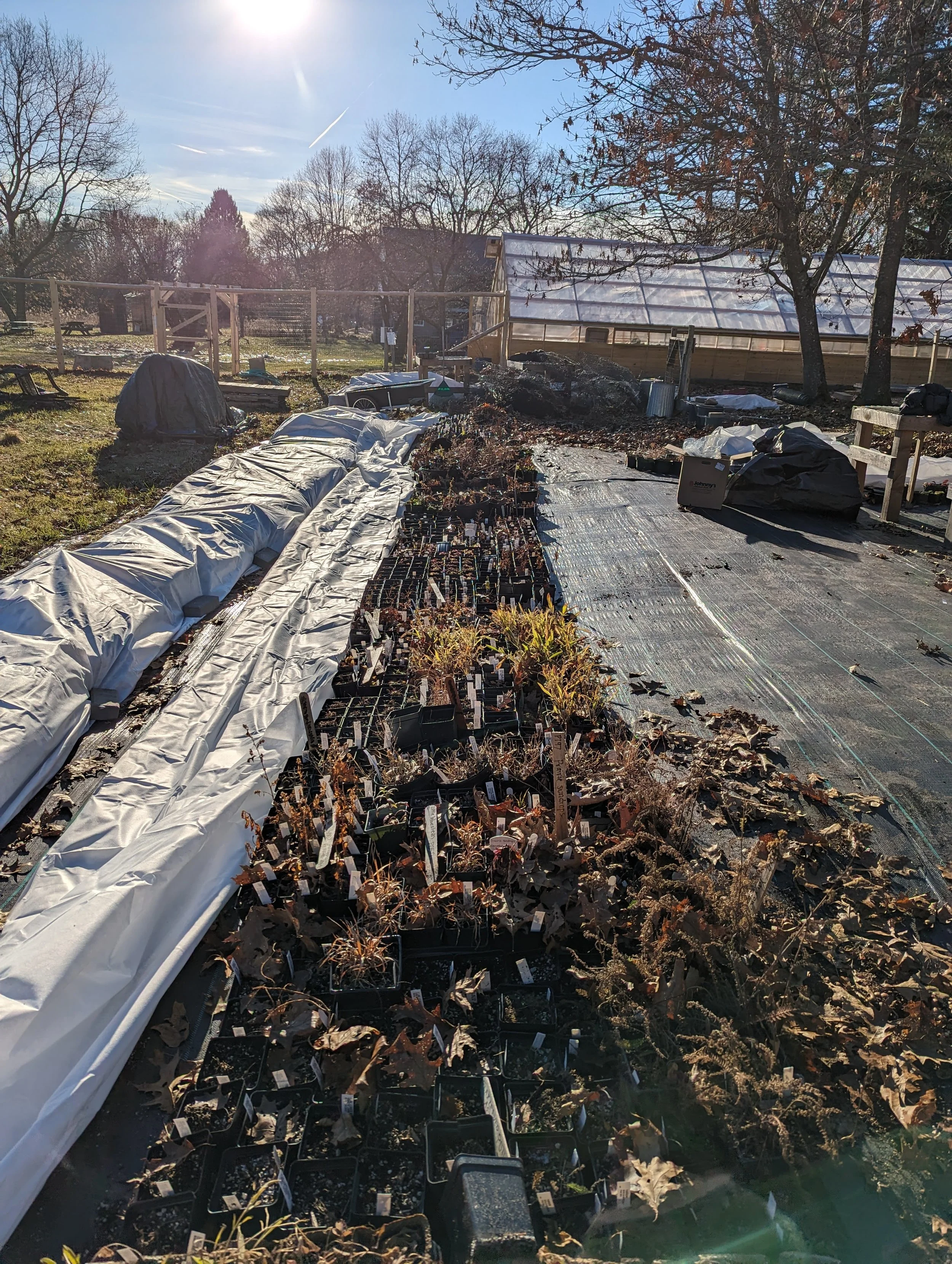
At the Native Seed Center, we cluster pots together, rake leaves over the top, and then tuck in row cover.