
The journey of a seed
This is a visual story of how a seed travels through the cycle of a year. Specifically, this is Tall White Aster, Doellingeria umbellata — also called Flat-top aster, Parasol aster, and Parasol whitetop.
Follow along from harvesting, to cleaning, packing, sowing, growing and finally planting again.
Mid-October
The flowers on this tall white aster are almost ready for harvest. Some are losing their petals, and some have completely changed over into fluffy clusters of seeds. Others still have all their bright white petals.

Late October
Now, all the flower petals have dropped and are replaced by dense bundles of seed, much like miniature dandelions. We harvest by flicking dry seeds off the seedheads into a brown paper bag, or clipping whole seedheads and leaving them to dry upside down in bags.

November
We pour the dried seedheads into a bowl for processing. Loose seeds were harvested off the plant in the field, or have fallen off during the drying process.

November
More seeds are gently plucked from the seed heads.

November
We place cleaned seed into sealed glass jars and store in the fridge to maintain a steady, cool, dry temperature. This jar of clean seed is ready for packing!

November
Seeds on a tray, ready to pack. Can you guess how many seeds are in each little pile? 100! Volunteers count out the first 100 into a pile. Then, they carefully take pinches of seed to match that first reference pile of 100. Thank you, volunteers!

November
100 seeds go into each labeled packet. Packets are sealed, bundled into sets of 10, then stored in zip-top plastic bags in the refrigerator. The checklist on the right is a list of other species we’re packing on this volunteer day. Lot numbers on the labels and checklist help us track the species name, where it grew, and what year seed was harvested.

December
Seeds are ready to be sown. This is where you get to join the process! Seeds get sprinkled onto a pot of soil, covered with sand, gently watered, and labeled. At the Wild Seed Project nursery, we do the same thing. We keep some of every batch of seeds we collect to grow into plants we can harvest from again, or that we can distribute to be planted other places.

December
Once the seeds are in a pot, they’re ready to go outside. We put them outside so they get the variable, cold temperatures and precipitation they need, in order to be ready to germinate in the spring. We protect them above and below with wire mesh to prevent small mammals, birds and other creatures from eating them over the winter.

February
Now we wait! All winter long, the pots of seeds sit through the snow and rain, through colder days and warmer days.

Early May
Finally, in the spring, the seeds germinate! Different species, and even different individuals in one species, start growing at different times— some in early April, while others don’t get going until June. The weather each year also affects when germination starts.

Mid-May
The tiny plants are starting to grow! This front, center pot is Tall White Aster.

Mid-June
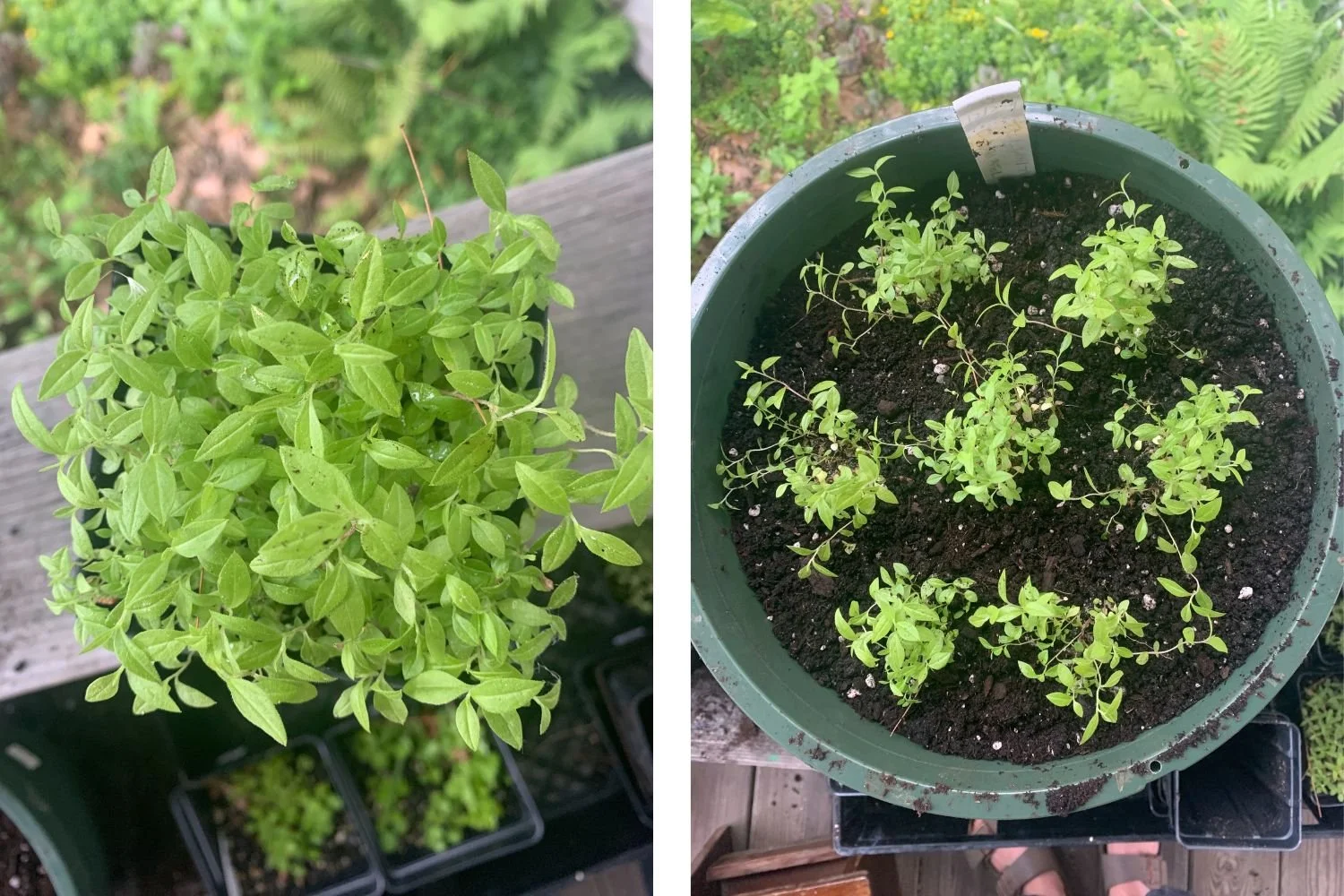
A month later, the tiny plants have grown much bigger, and they are getting crowded in the pot. Notice how deep the roots have grown, compared to the growth of the shoots above ground.

Mid-June
That one pot of seedlings can get divided and planted into more pots of the same size, or into one bigger pot. Either way, the seedlings have more space to grow.
Mid-July
And they’ve grown again! This is the same pot of seedlings, one month later. Seedlings can keep growing in this pot, or get divided again.

Late September
These plants have been divided once more, then kept on growing, and now bloomed. It’s s relatively rare for perennial native plants to flower their first year, as most species spend their first year putting lots of energy into strong, healthy root systems.

Late October
Fall is a great time to move plants from pots to the ground. First, we clear a space in the garden bed and dig a hole. Then, we pause to admire those amazing root systems! Finally, we plant the seedling in the ground, water well, and cover the surface with dry leaves as mulch. Over the winter, the shoots and leaves above ground will die back, but those roots will carry on. The plant will emerge again and grow over spring and summer, set flowers, and finally be ready to harvest seeds in the fall, starting the cycle all over again.

Want to join the plant care lifecycle? You can read this article on how to sow native seeds in the winter, check our events page for online and in person workshops on this season’s stage in the lifecycle, or if you live nearby - come volunteer to do this work together.