
Native Edible Greens
by Heather McCargo
Edible Plants for Your Backyard
Spring is a great time to taste some of Maine’s native plants that have edible leaves and shoots. Rather than foraging wild plants, we encourage growing these species at home: this is conservation through cultivation.
Many of our native greens are much slower growing than the cultivated vegetables and edible weeds that sprout up quickly around our farms and disturbed areas. Most of these slower growing species cannot sustain commercial harvesting by foragers; their life cycles are just too slow for the number of humans out there collecting these plants. If you hope to be eating these plants well into the future, plant some. In a couple years, you could be foraging in your own back yard.
Species are organized by growing conditions and harvest time. Choosing the right plant for the right place gives them the best opportunity to thrive and produce an abundant harvest.
Shade Loving Species from the Woodland Understory
These species are best in a shady location, ideally with deciduous trees nearby. Amend soil with well-rotted leaf mold or compost:

Wild leek, ramps
Allium tricoccum
This delicious spring green is one of many native wild onion species. A true spring ephemeral of the deciduous forest, tender green strap-like leaves emerge in early spring to take advantage of the leafless tree canopy. Leaves go dormant within two months; by mid-summer the flowers emerge. This plant has a very slow life cycle, so build up a large population before harvesting above ground greens that are delicious sautéed. Read more about cultivating this plant.
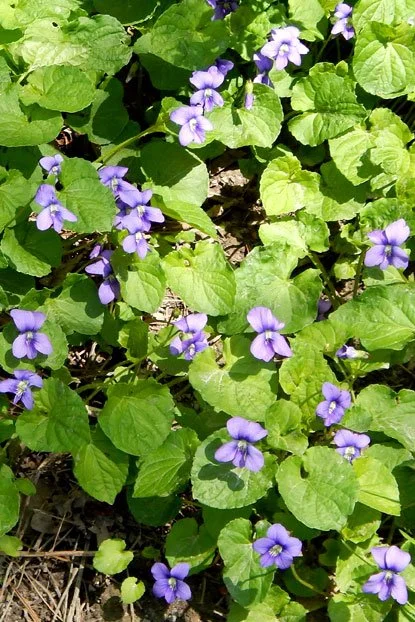
Violets
Viola spp.
Violets make charming garden plants emerging in early spring with edible young leaves and flowers that are delicious in salads (and beloved by children). One plant, if happy, will quickly spread by seed.
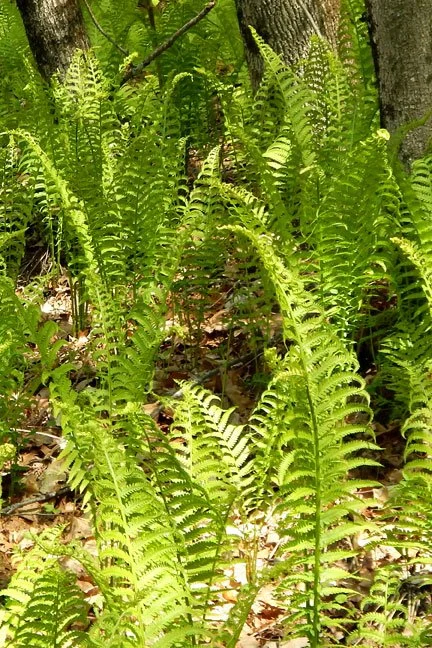
Ostrich Fern
Matteuccia struthiopteris
This is the familiar fiddlehead that appears in spring markets throughout the state. In late spring the fronds unfurl into large dramatic vase shaped ferns. Grow in dense to light shade in moist fertile soil. The patch will expand over time so give it plenty of room. In the 3rd year of establishment you can begin harvesting the young fiddleheads. They can be cooked or pickled.
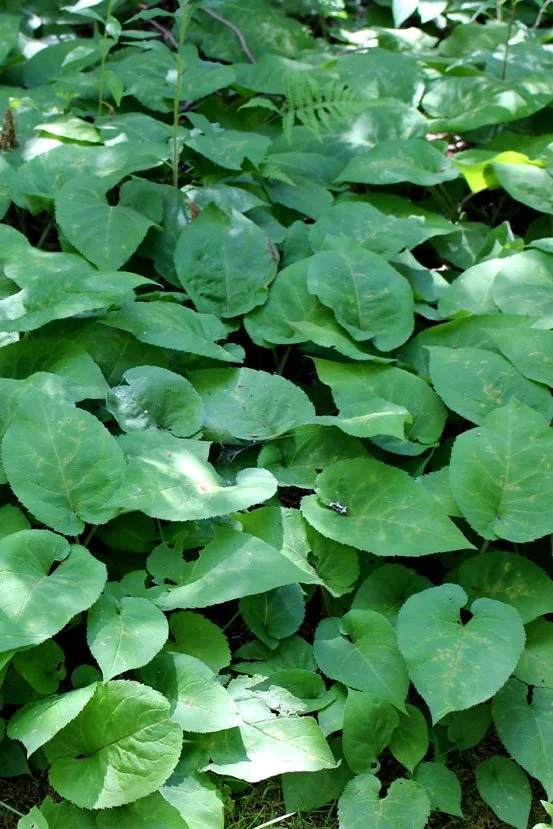
Large-leaved wood-aster
Eurybia macrophylla
Harvest the large leaves within a week of emerging in May. Chop and sauté like chard or add to curries and soups. This aster is very easy to grow from seed and expands to a large group of low growing foliage with attractive heart shaped leaves. In late summer, white to pale lavender blooms attract many pollinators. One of the fastest growing native greens that can give you an abundant harvest every year.

False Solomon’s seal
Maianthemum racemosum
A native wood lily with edible shoots. Harvest at 6-8” tall and prepare like asparagus. This species is slow growing and our wild populations should be protected. It can be grown from fresh seed, and a handful of seeds will, in 4-5 years, grow into a nice patch for home harvesting.
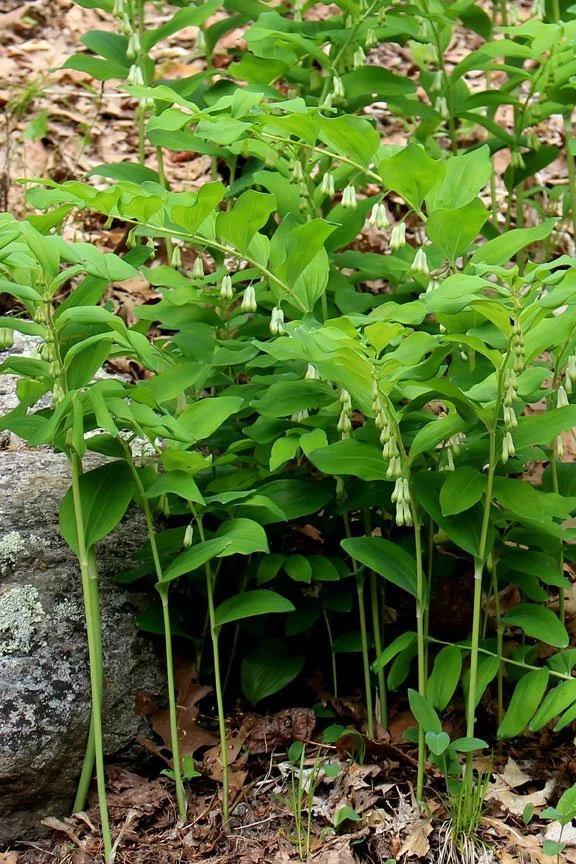
Solomon’s seal
Polygonatum biflorum var. commutatum
Another woodland plant in the lily family, this dramatic species is also slow from seed but reproduces vigorously in a garden from mature roots within 5 years. Harvest at 6-8” tall and peel the bitter outer sheath before cooking like asparagus. Bumblebees and hummingbirds pollinate the flowers.
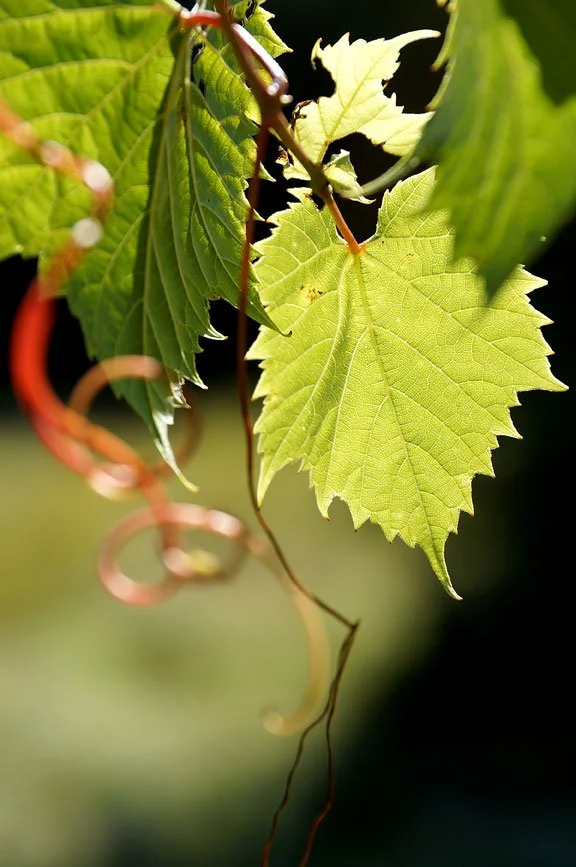
Wild grape vine
Vitis labrusca, V. riparia
A large woody vine that grows on woodland edges and shady streamsides scrambling over shrubs and up large trees. Plant the vine on a large arbor to manage its growth for ease of harvest. Pick the edible leaves within a week of unfurling in late spring and sauté or preserve in brine for wrapping around savory fillings. In the fall enjoy the flavorful but tart fruits in jams and juices.
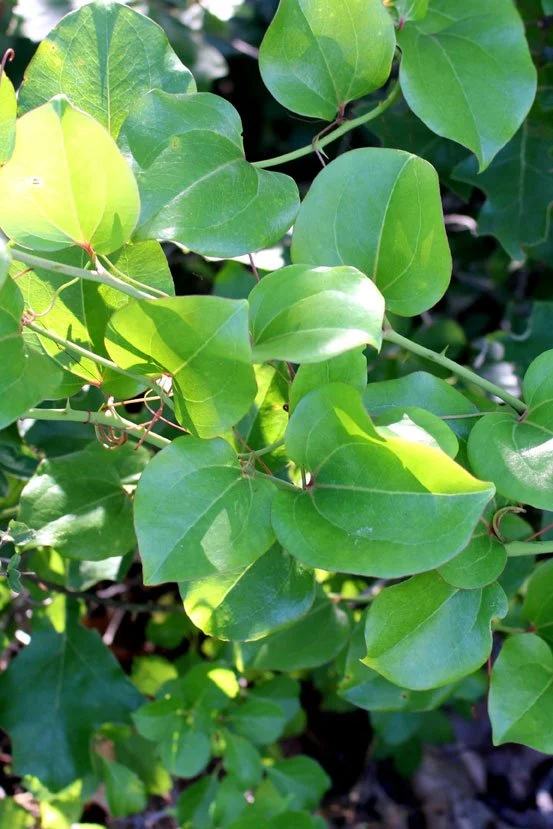
Greenbrier
Smilax rotundifolia
A vigorous perennial vine that scrambles over large shrubs at the woodland edge. Not for small landscapes, it produces abundant and delicious young shoots that can be cooked like asparagus, or young leaves and tendrils that can be sautéed like spinach. If you have a large property, greenbrier offers a tasty harvest on the edge of a field where other crops can’t grow. Birds relish the late summer blue-black fruits. Slow to propagate from freshly harvested seed but worth the wait.
Sun Loving Species from Wet Meadows and Ponds
Plant in full to part sun with moist soil, or directly into water.
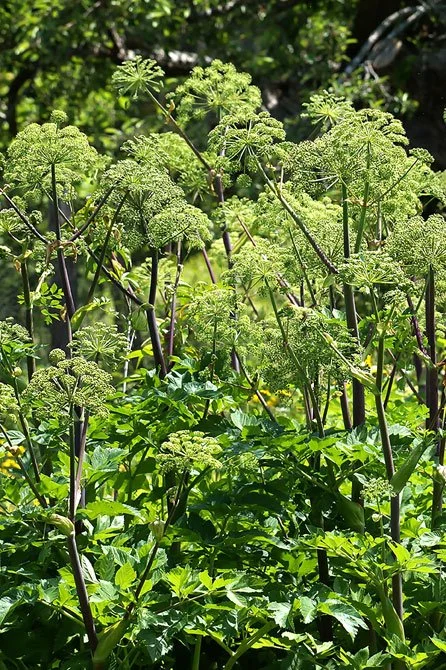
Purple-stemmed Angelica
Angelica atropurpurea
A large dramatic biennial that self sows abundantly. The tender stems of angelica can be cooked like a vegetable or candied with sugar for a treat. Also used medicinally.
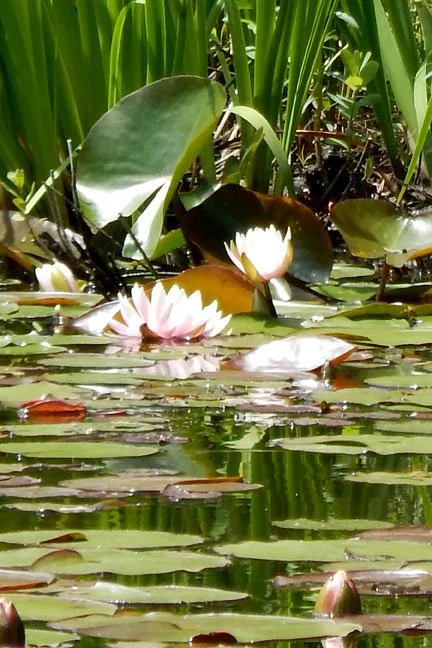
Pond lily
Nymphaea odorata
The young rolled leaves or unopened flower buds can be harvested and cooked. This plant grows to a large group in a pond. Can be planted in a large pot in a water trough or in a water garden.
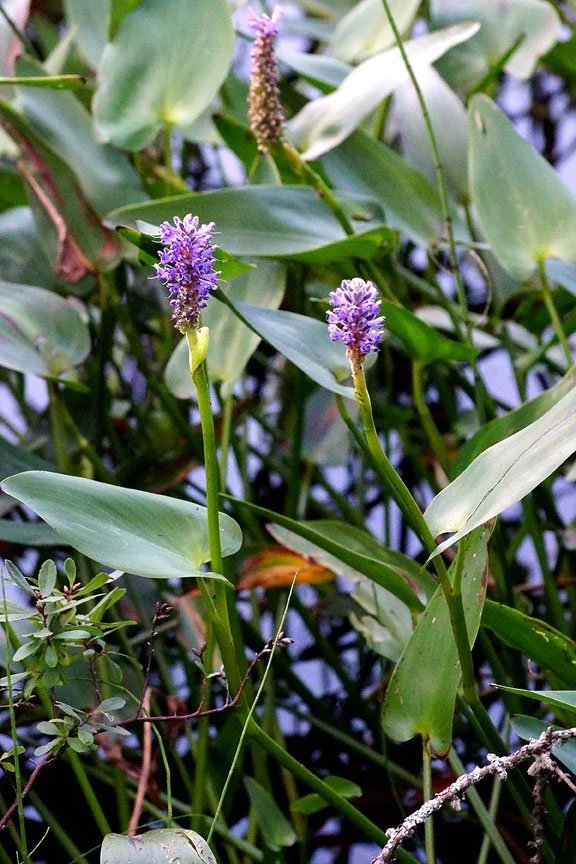
Pickerelweed
Pontederia cordata
The young leaves can be harvested as they first emerge above the water. Chop raw in salads or sautéed like chard. Can be grown in a water garden, in a large pot in water, or natural pond.
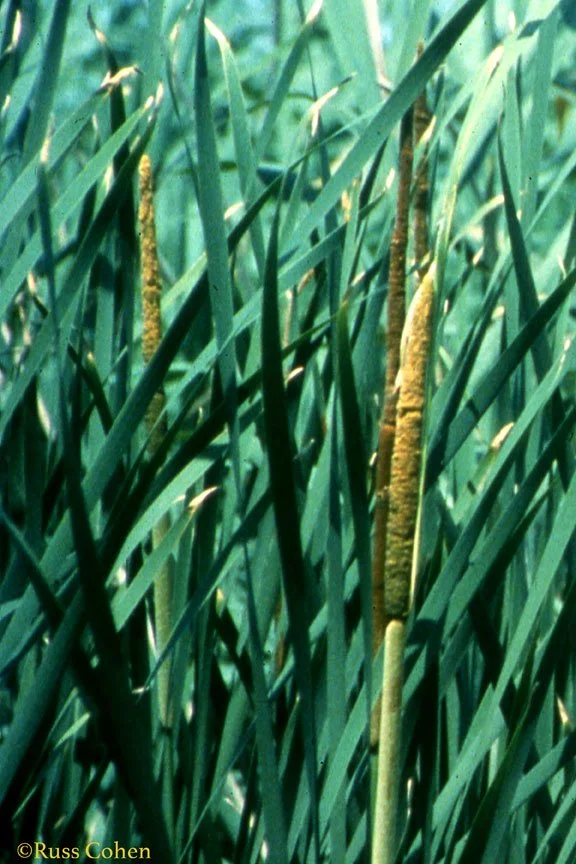
Cattails
Typha latifolia
One of our most useful native plants, with all parts including the roots, shoots, leaves, flowers and pollen edible and delicious. As a vegetable, harvest the young shoots from below the water level, steam or sauté and serve with hollandaise sauce. Later you can pick the green inflorescence to steam and eat like corn on the cob. This plant could potentially be an alternative crop for small farmers in wet meadows, instead of draining these fields they could converting it to a perennial cattail bed.
There are many excellent books on edible native plants. I like the Peterson Field Guide to Edible Wild Plants for its comprehensive coverage, Wild plants of Maine: a Useful Guide by Tom Seymour, and Wild Plants I have known and Eaten Russ Cohen. Some of the permaculture books also cover native perennial vegetables, like Perennial Vegetables by Eric Toensmeier.