
Swamp Milkweed (Asclepias incarnata)
by Ginger Laurits
Swamp milkweed (Asclepias incarnata) is a garden-friendly species, happy to stay contained, unlike its cousin, common milkweed, (Asclepias syriaca), which enjoys running rampant underground and popping up in random places far from where it was planted. In the wild, swamp milkweed grows in wet meadows, marshes and along the shores of lakes and streams throughout the Northeast. Although a wetland plant, it tolerates moist to moderately dry conditions in sun/part sun (though not dry, sandy soil). It reaches three feet tall in July, topped with light pink, fragrant blossoms that attract many pollinators, including butterflies, bees, and hummingbirds. All milkweed species provide a much-needed food source for Monarch caterpillars and butterflies.

Swamp milkweed is lovely in the perennial border planted alongside other plants that tolerate sun/part shade, including New England aster, tall American bell flower, three-lobed coneflower, blue vervain, wild iris, and boneset. It also makes a great addition to the edge of a pond or stream, or in a rain garden (See A Rain Garden at Your Downspout ). Although summer aphids may pay a visit (they need to eat, too!), the plant tolerates them without much damage. Swamp milkweed is also deer resistant, which merely means it is not a preferred food.
Growing Swamp Milkweed
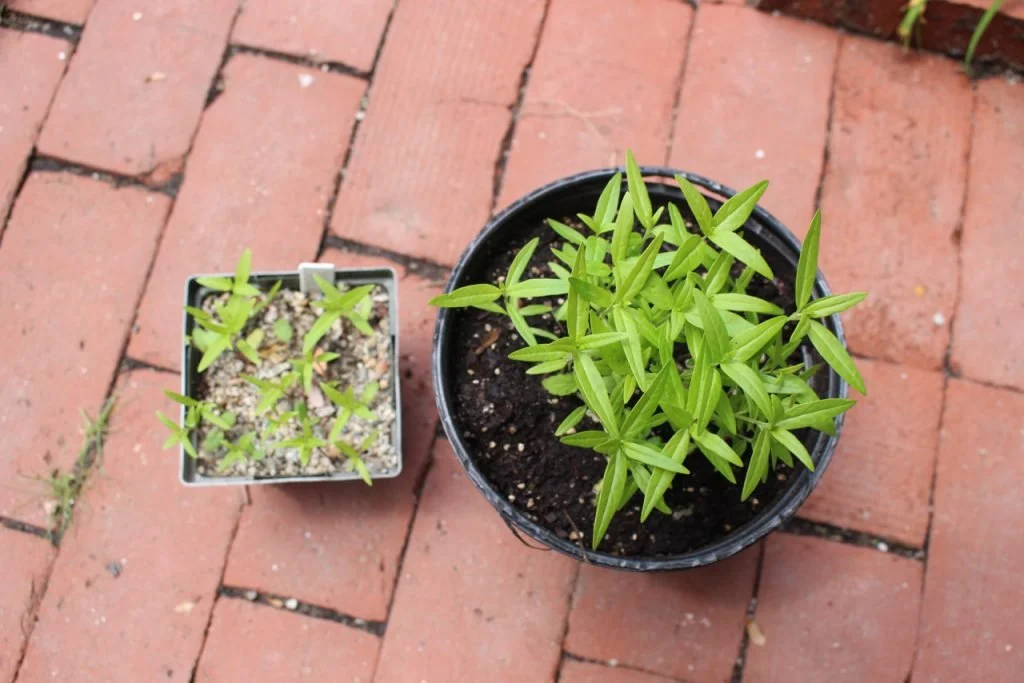
Swamp milkweed is easy to grow from seed. To grow your own swamp milkweed, plant seeds in a pot outdoors in the fall, winter or early spring. The wet, cold conditions mimic wild seed propagation in nature and the seeds will germinate in mid spring. To learn more about growing and sowing the seeds of native milkweeds, read MONARCHS AND MILKWEED: Creating a Landscape in Maine to Support Monarch Butterflies and Other Pollinating Insects. To purchase Swamp Milkweed seeds, visit our shop.
Ginger Laurits is a former Wild Seed Project board member who tends the native garden at the Wells Reserve.